
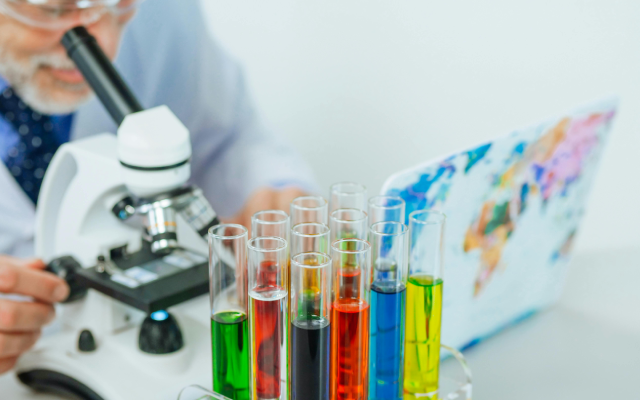
Kamu perlu mengetahui bahwa mempelajari istilah kimia dalam bahasa Inggris bukan hanya sekedar menghafal kata, melainkan membuka pintu menuju pemahaman sains yang lebih luas secara global. Dimulai dari terminologi dasar seperti Atom, Compound (senyawa), hingga Periodic Table (tabel periodik), kosakata ini merupakan fondasi utama untuk memahami bagaimana materi tersusun. Dengan menguasai istilah seperti Solution (larutan) dan konsep Acid/Base (asam/basa), maka kamu akan lebih mudah mengikuti literatur internasional maupun diskusi ilmiah yang bersifat teknis.
Selain teori, penguasaan bahasa Inggris dalam konteks laboratorium juga sangat penting untuk aspek keamanan dan ketelitian eksperimen. Mengenal alat-alat seperti Beaker (gelas kimia), Test Tube (tabung reaksi), hingga istilah proses seperti Catalyst (katalisator) yang mempercepat reaksi, membantu praktikan bekerja dengan standar profesional. Memahami istilah-istilah ini secara ringan namun konsisten akan membuat proses belajar kimia terasa lebih intuitif, terutama saat kamu sudah mulai mengeksplorasi fenomena Chemical Reactions (reaksi kimia) yang kompleks.
Istilah Kimia dalam Bahasa Inggris
Memahami istilah kimia dalam bahasa Inggris sangat memudahkan kamu saat membaca jurnal ilmiah, buku teks internasional, atau panduan penggunaan bahan di laboratorium. Berikut adalah ringkasan istilah-istilah penting yang dibagi ke dalam kategori dasar, reaksi, dan peralatan.
| Istilah Kimia | Artinya | Contoh Kalimat |
| Atom | Atom | In a chemical reaction, atoms are rearranged to form new substances. |
| Molecule | Molekul | Water consists of two hydrogen atoms in one molecule. |
| Element | Unsur | Each element is placed in the periodic table based on its atomic number |
| Compound | Senyawa | Sodium chloride is a common chemical compound. |
| Mixture | Campuran | A mixture can be separated into its original components using physical methods like filtration or evaporation. |
| Proton | Proton | If the number of protons in an atom changes, it becomes a completely different element. |
| Neutron | Neutron | In heavy elements, a specific ratio of neutrons to protons is required to keep the nucleus stable. |
| Electron | Elektron | Chemical bonds are formed when atoms share or transfer electrons to achieve stability. |
| Nucleus | Inti Atom | Within the nucleus, protons and neutrons are held together by the strong nuclear force. |
| Ion | Ion | An ion is an atom with a net electric charge. |
| Isotope | Isotop | Carbon-14 is a radioactive isotope of carbon. |
| Valence | Valensi | Valence electrons are involved in chemical bonding. |
| Covalent Bond | Ikatan Kovalen | Atoms share electrons in a covalent bond. |
| Ionic Bond | Ikatan Ion | An ionic bond forms between a metal and a non-metal. |
| Catalyst | Katalisator | Enzymes act as a catalyst in biological reactions. |
| Reaction | Reaksi | The reaction produced a bright blue flame. |
| Reactant | Reaktan | Nitrogen is a reactant in the synthesis of ammonia. |
| Product | Produk | Water is the product of burning hydrogen. |
| Solution | Larutan | Stir the salt until it forms a clear solution. |
| Solvent | Pelarut | Water is often called the universal solvent. |
| Solute | Zat Terlarut | Sugar is the solute in a sweetened drink. |
| Saturated | Jenuh | A saturated solution cannot dissolve more solute. |
| Acid | Asam | Citric acid gives lemons their sour taste. |
| Base | Basa | Sodium hydroxide is a strong base. |
| pH Scale | Skala pH | The pH scale measures how acidic a liquid is. |
| Neutral | Netral | Pure water has a neutral pH of 7. |
| Concentration | Konsentrasi | High concentration of acid can be corrosive. |
| Dilute | Encer | You need to dilute the acid with water. |
| Evaporation | Penguapan | The chemist used a Bunsen burner to speed up the evaporation of the solvent, leaving the solid crystals behind. |
| Condensation | Kondensasi | Condensation is the opposite of evaporation. |
| Precipitate | Endapan | After the reaction was complete, the precipitate was filtered, dried, and weighed for further analysis. |
| Distillation | Distilasi | Distillation is used to purify liquids. |
| Filtration | Filtrasi | Separate the sand from water using filtration. |
| Oxidation | Oksidasi | Rusting is a common example of oxidation. |
| Reduction | Reduksi | Reduction involves the gain of electrons. |
| Combustion | Pembakaran | Oxygen is required for the combustion process. |
| Endothermic | Endotermik | An endothermic reaction absorbs heat. |
| Exothermic | Eksotermik | Burning wood is an exothermic reaction. |
| Equilibrium | Kesetimbangan | The reaction has reached dynamic equilibrium. |
| Mole | Mol | A mole contains 6.022 x 10²³ particles. |
| Molarity | Molaritas | Check the molarity of the solution on the label. |
| Density | Massa Jenis | Oil floats on water because of its lower density. |
| Viscosity | Kekentalan | Honey has a higher viscosity than water. |
| Volatility | Volatilitas | Alcohol has high volatility and evaporates quickly. |
| Sublimation | Sublimasi | Dry ice undergoes sublimation at room temperature. |
| Titration | Titrasi | We used titration to find the concentration. |
| Buffer | Penyangga | A buffer solution resists changes in pH. |
| Enzyme | Enzim | Digestive enzymes in the stomach break down complex food molecules into smaller nutrients that the body can absorb. |
| Polymer | Polimer | Plastic is a synthetic polymer. |
| Monomer | Monomer | Amino acids are the monomers of proteins. |
| Hydrocarbon | Hidrokarbon | Methane is the simplest hydrocarbon. |
| Alkali | Alkali | Lithium is an alkali metal. |
| Halogen | Halogen | Chlorine belongs to the halogen group. |
| Noble Gas | Gas Mulia | The noble gases are located in Group 18, on the far right side of the periodic table. |
| Metal | Logam | Copper is a highly conductive metal. |
| Non-metal | Non-logam | Sulfur is a brittle non-metal. |
| Metalloid | Metaloid | Silicon is a well-known metalloid. |
| Anode | Anode | Electrons flow away from the anode. |
| Cathode | Katode | Electrons flow toward the cathode. |
| Electrolysis | Elektrolisis | Electrolysis can split water into oxygen and hydrogen. |
| Periodic Table | Tabel Periodik | Check the periodic table for the atomic weight. |
| Atomic Mass | Massa Atom | The atomic mass is essentially the sum of the protons and neutrons found in an atom’s nucleus |
| Radioactivity | Radioaktivitas | Uranium is known for its high radioactivity. |
| Half-life | Waktu Paruh | The half-life of Carbon-14 is 5,730 years. |
| Solid | Padat | Ice is the solid state of water. |
| Liquid | Cair | Mercury is a liquid at room temperature. |
| Gas | Gas | Helium is a very light gas. |
| Plasma | Plasma | Plasma is often called the fourth state of matter. |
| Solubility | Kelarutan | Temperature affects the solubility of sugar. |
| Diffussion | Difusi | The smell of perfume spreads through diffusion. |
| Osmosis | Osmosis | Osmosis is the movement of water through a membrane. |
| Inorganic | Anorganik | Inorganic chemistry studies minerals and metals. |
| Organic | Organik | Organic chemistry focuses on carbon compounds. |
| Synthesis | Sintesis | The synthesis of aspirin requires salicylic acid. |
| Decomposition | Penguraian | Heat can cause the decomposition of limestone. |
| Beaker | Gelas Kimia | Pour 100ml of water into the beaker. |
| Flask | Labu | Use an Erlenmeyer flask for the titration. |
| Test Tube | Tabung Reaksi | Place the test tube in the wooden rack. |
| Graduated Cylinder | Gelas Ukur | Measure the liquid accurately with a graduated cylinder. |
| Pipette | Pipet | Use a pipette to add the reagent drop by drop. |
| Burette | Buret | The burette is essential for precise titration. |
| Funnel | Corong | Use a funnel to pour the liquid without spilling. |
| Thermometer | Termometer | Monitor the temperature with a thermometer. |
| Bunsen Burner | Pembakar Bunsen | Light the Bunsen burner to heat the solution. |
| Balance | Neraca / Timbangan | Weigh the powder on the analytical balance. |
| Stirring Rod | Batang Pengaduk | Use a glass stirring rod to mix the chemicals. |
| Crucible | Cawan Porselen | The crucible is used for high-temperature heating. |
| Mortar & Pestle | Alu dan Lumpang | Grind the crystals using a mortar and pestle. |
| Tongs | Penjepit | Use tongs to handle the hot beaker. |
| Spatula | Spatula | Scoop a small amount of powder with a spatula. |
| Centrifuge | Sentrifugasi | The centrifuge separates solids from liquids. |
| Spectroscopy | Spektroskopi | Spectroscopy helps identify unknown substances. |
| Chromatography | Kromatografi | Paper chromatography can separate ink pigments. |
| Reagent | Reagen / Pereaksi | Add the reagent to start the reaction. |
| Indicator | Indikator | Litmus paper is a common pH indicator. |
| Flammable | Mudah Terbakar | Ethanol is a highly flammable liquid. |
| Corrosive | Korosif | Sulfuric acid is extremely corrosive to skin. |
| Toxic | Beracun | Many heavy metals are toxic to humans. |
| Inert | Iner / Tidak Reaktif | Nitrogen provides an inert atmosphere. |
| Vapor | Uap | Water vapor is invisible to the eye. |
| Crystallization | Kristalisasi | Salt is obtained from seawater through crystallization. |
| Melting Point | Titik Lebur | The melting point of gold is 1,064°C |
| Boiling Point | Titik Didih | Scientists use the boiling point as a physical property to identify unknown pure substances |
| Condenser | Kondensor | Make sure the condenser is tightly connected to prevent any chemical vapors from escaping into the lab |
| Distillate | Distilat | Collect the distillate in a separate flask. |
| Suspension | Suspensi | A suspension is a heterogeneous mixture containing large solid particles that will eventually settle at the bottom if left undisturbed. |
| Colloid | Koloid | The particles in a colloid are small enough that they do not settle at the bottom, even after standing for a long time |
| Alloy | Paduan Logam | Steel is a widely used alloy made of iron and a small percentage of carbon. . |
| Anhydrous | Anhidrat | Anhydrous copper sulfate is white in color. |
| Aqueous | Berair / Akuatik | In a chemical equation, the symbol (aq) is used to show that a substance is in an aqueous state, meaning it is dissolved in water. |

Baca Juga: 50+ Istilah Fisika dalam Bahasa Inggris yang Sering Muncul
100+ Istilah Matematika dalam Bahasa Inggris yang Wajib Diketahui Beserta Artinya
Memahami terminologi kehutanan seperti perbedaan antara woods, forest, dan jungle, hingga istilah teknis seperti silviculture dan carbon sequestration, sangatlah penting untuk memperluas wawasan ekologi sekaligus memperkaya penguasaan kosakata bahasa Inggris fungsional. Seluruh materi kosakata ini merupakan contoh nyata dari kurikulum aplikatif yang bisa kamu pelajari di ICAN Learning Centre (ILC), di mana metode pembelajaran dirancang secara interaktif untuk membantu siswa menguasai bahasa Inggris di berbagai bidang spesifik.
Dengan bimbingan tutor profesional di ILC, kamu tidak hanya menghafal istilah teknis kehutanan ini, tetapi juga dilatih untuk menggunakannya secara fasih dalam konteks akademis maupun profesional, sehingga kemampuan komunikasi kamu menjadi lebih tajam, luas, dan relevan dengan isu-isu global masa kini.